
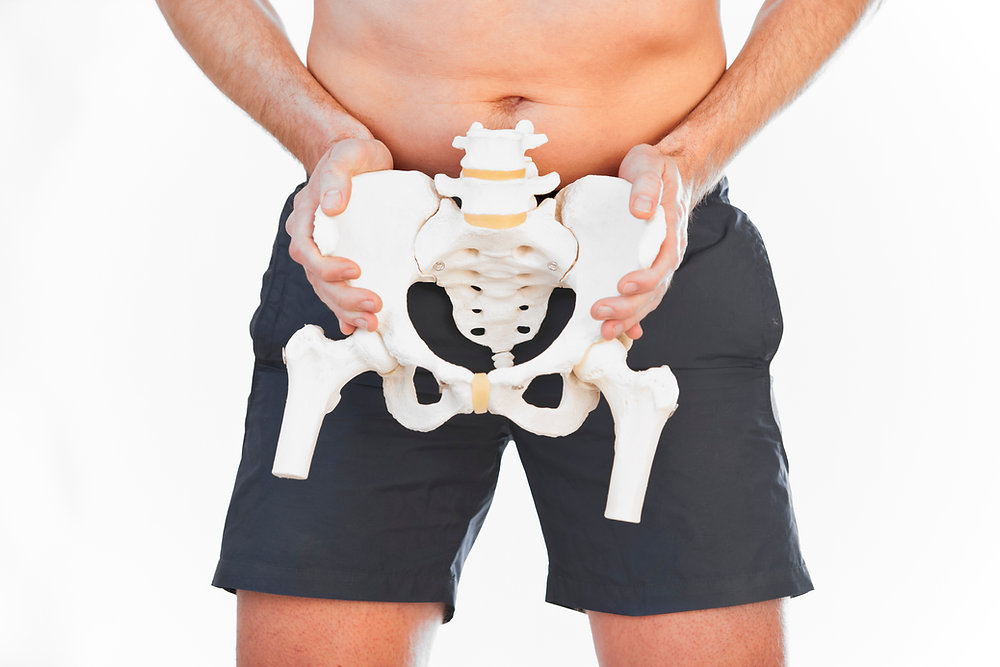
Lana MacDonald, PT — The pelvic floor is a group of muscles that line the base of the pelvis, and for men & women, plays an important role in bowel, bladder and sexual function. Unfortunately, men are not as good as women when it comes to asking for help when issues arise.
One area where men struggle is when there is a diagnosis of prostate cancer (accounting for 28% of cancers diagnosed in males) and the surgical intervention associated and often recommended after this diagnosis.
Pelvic floor dysfunction affects 1 in 8 men. Some of the most common signs are urinary or fecal incontinence and erectile dysfunction. The two most common pelvic health conditions men present with in clinic include chronic pelvic pain syndrome (CPPS) and post-prostatectomy incontinence. CPPS may present with pain with sitting, pain anywhere from the belly button to the perineum & buttocks. Men undergoing radical prostatectomy for prostate cancer treatment often experience incontinence. Even though there usually is some pre-surgical education and the side effects are reviewed, many men, at this point, are more focused on their diagnosis and becoming cancer free and are not focused on the expected post-surgical side effects. They are unprepared physically and emotionally to handle it alone when incontinence is not getting better with time.
What can men expect to experience Post-Prostatectomy?
Urinary Incontinence – About 6% to 8% of men experience this kind of urinary leakage. By learning to strengthen and tighten their pelvic floor muscles around their bladder, they can help reduce the amount of urine that leaks or stops it from happening completely in mild to moderate cases.
Erectile Dysfunction – Sometimes, a surgeon will remove all or part of a nerve that allows for erections to occur as part of a prostatectomy. This, along with other treatments like radiation or chemotherapy, could lead to temporary or permanent erectile dysfunction.
Even when all of your nerves are intact, you may not get full functionality of your erection for at least six months to up to two years after surgery. Pelvic health physiotherapy can help minimize and, in most cases, correct these issues over time.
When to see a Pelvic Health Physiotherapist or start doing the recommended exercises?
You can begin doing pelvic health strengthening exercises in the weeks or months leading up to your procedure (preoperative) and can start them up again after the catheter has been removed, about a week after surgery. But it’s important to remember that everyone heals differently.
Before doing these exercises, you should consult with your healthcare provider, urologist or pelvic health physiotherapist who can evaluate the strength of your pelvic muscles. Your healthcare provider will teach you how often to perform the pelvic exercises correctly, and this sometimes may include an internal assessment. One reason you want to do this before starting them on your own is that it’s possible for you to over-exercise your pelvic floor muscles.
Other areas the pelvic floor physiotherapist can assist with are scar tissue management, guided exercises to help relax the pelvic floor muscles, strategies to help with constipation, core strengthening & conditioning, stress management and breathing exercises, and liaison with other healthcare practitioners to give the best post-operative care and meet the client’s needs to help them return to their highest level of function.
You also want to avoid cycling, squatting or doing anything that puts intense pressure on your pelvic floor region for at least the first few months after surgery.
Recovery takes time. Everyone progresses at their own pace. It’s important to speak up and ask for help, stay consistent, be patient and celebrate each and every win along the way. If you are a male and are experiencing pelvic health issues or scheduled to have prostate surgery in the future, feel free to reach out to your health care provider or pelvic health physiotherapist for support and advice. We are fortunate to have several physiotherapists trained in Men’s Health registered and working on PEI and accepting new Men’s Health clients and are more than happy to help.